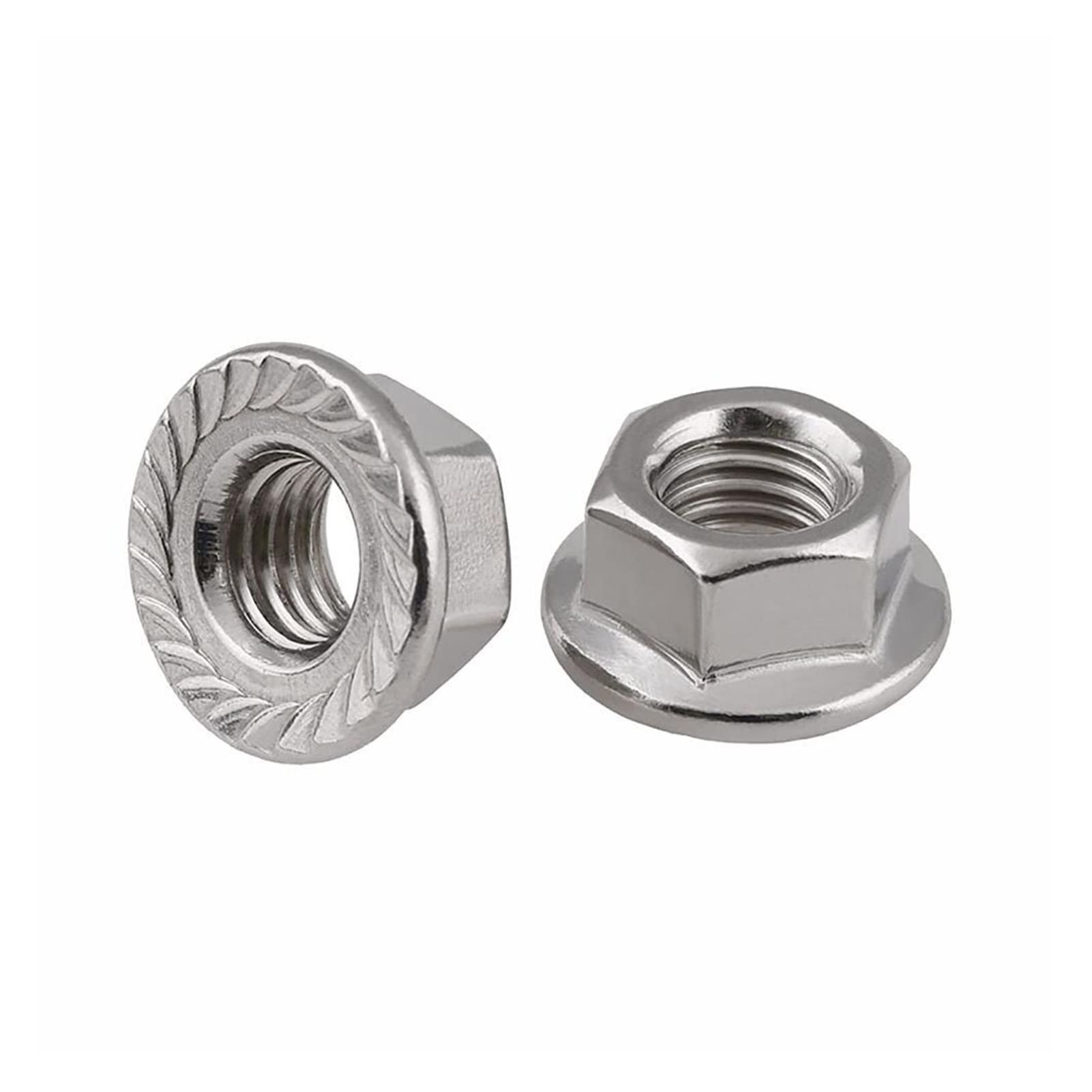
Wind Turbine Lock Nuts Manufacturer: Prevailing Torque Nuts for Tower & Blade Bolting
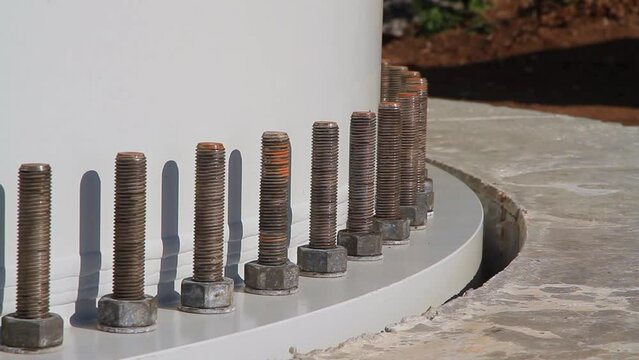
A wind tower flange joint can see millions of load cycles in its life — and every bolt connection must hold its preload against vibration, bending and temperature swing. WF Fastener manufactures wind turbine lock nuts — prevailing torque nuts, flange lock nuts and heavy hex nuts for tower flange, blade root and pitch bearing bolting — with corrosion-resistant finishes and documentation that matches turbine OEM and project requirements.
WF Fastener — Wind Turbine Lock Nuts Quick Reference:
- Products: prevailing torque nuts (nylon insert and all-metal), flange lock nuts, heavy hex nuts
- Sizes: M16–M42 (5/8" – 1-5/8"), metric and imperial per turbine design
- Finishes: hot-dip galvanized, Dacromet / zinc flake, PTFE-coated, per corrosion class
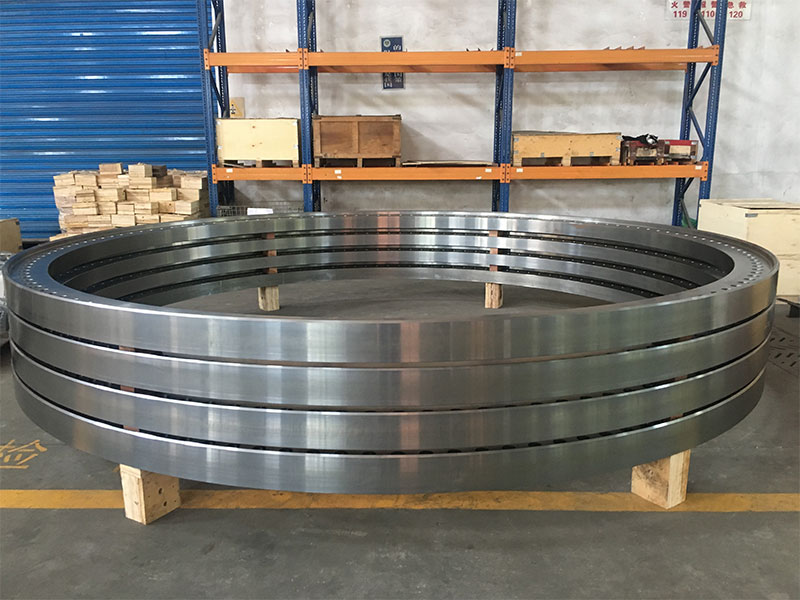
- Applications: tower flange bolting, blade root connections, pitch bearing bolting, nacelle bolting
- Torque behavior: prevailing torque verified per lot; K-factor documented for tightening procedure
- Certification: material certificate, torque test report, dimensional report
Based on our delivery records to North American wind projects, turbine lock nut acceptance usually hinges on three points: locking mechanism selection, torque-tension behavior, and finish corrosion protection.
Locking Mechanisms for Turbine Bolting
Turbine bolting uses two families of locking nuts, and the choice depends on the joint and the maintenance plan:
- Prevailing torque nuts — the nut carries a locking element that creates friction on the thread, resisting loosening under vibration. Two sub-types are common: nylon insert (with a polymer collar, single-use) and all-metal (deformed thread or collar, re-usable within limits).
- Flange lock nuts — a flange face with serrations or a plain face distributes load and, with the right mating surface, resists rotation. Serrated flange nuts are common in blade root and pitch bearing connections.
For tower flange bolts, all-metal prevailing torque nuts are frequently specified because they survive repeated tensioning; nylon insert nuts are common in less critical, single-torque applications. The turbine OEM's bolting specification decides the mechanism — never substitute one family for the other without approval.
Prevailing Torque and Torque-Tension Behavior
The locking element changes the torque-tension relationship. The tightening procedure must account for the prevailing torque component, and the torque-tension (K-factor) behavior must be documented:
- Prevailing torque verification — measured per lot with calibrated torque wrenches, first and fifth use where re-use applies, recorded in the test report
- K-factor documentation — the nut-bolt combination is torque-tested to establish the tightening factor for the project procedure
- Lubrication — the prevailing torque nut is supplied with the specified lubrication state; field-applied lubricant changes the K-factor and must be agreed with the OEM procedure
- Re-use limits — nylon insert nuts are single-use; all-metal nuts have defined re-use limits, verified by prevailing torque retest
Documenting the K-factor and prevailing torque range is what allows the site torque tool to be set correctly — this is a standard inspection point on turbine projects.
Finish and Corrosion Protection
Turbine fasteners are exposed to salt, humidity and temperature cycling, so the finish is part of the bolting specification:
| Finish | Typical use | Notes |
|---|---|---|
| Hot-dip galvanized | Tower flange, exterior bolting | Thick coating; over-tap control required |
| Dacromet / zinc flake | Blade root, high-strength bolting | Hydrogen-embrittlement-safe, thin coating |
| PTFE / Xylan-coated | Seized-joint prevention, offshore | Low friction, stable K-factor |
| Plain + anti-seize | Controlled indoor joints | Lubricated at assembly per procedure |
For high-strength turbine bolting (Class 10.9 and above), zinc flake (Dacromet-type) coatings are preferred over electroplating to avoid hydrogen embrittlement risk. The finish must be specified together with the coating thickness and the test requirement.
Grade Matching and Standards
Lock nuts for turbine bolting are matched to the bolt property class:
| Bolt property class | Typical lock nut | Standard reference |
|---|---|---|
| Class 8.8 | Class 8 / 10 nut, prevailing torque | ISO 7040 (nylon insert), ISO 7042 (all-metal), ISO 4161 (flange) |
| Class 10.9 | Class 10 nut, prevailing torque | ISO 7040 / 7042 / 4161 |
| Grade 5 / 8 (imperial) | Grade C / DH nut | ASTM A563 / SAE J995 equivalents |
The nut grade must meet or exceed the bolt class — never pair a Class 8 nut with a Class 10.9 bolt. For the bolt side of these connections, see our Wind Turbine Tower Bolts guide. For the complete hot-dip galvanizing process and over-tap control for tower exterior bolting, refer to our Hot-Dip Galvanized Bolts (HDG) guide, and for transmission and lattice tower structural bolting, see our Lattice Tower Bolts page.
WF Fastener Manufacturing and Quality Control
WF Fastener produces turbine lock nuts on a controlled line, and supplies fasteners for the broader renewable energy sector, supporting wind and grid infrastructure projects across North America:
- Material control — carbon steel and alloy steel bar stock from certified mills, with heat numbers recorded and verified on receipt
- Cold forming and tapping — nuts cold-formed and tapped to the specified class; thread fit verified with calibrated ring/plug gauges
- Locking element assembly — nylon insert or all-metal deformation applied on controlled tooling, with prevailing torque verified on every lot
- Finish application — HDG, zinc flake or PTFE applied per specification, with coating thickness and salt spray testing per lot
- Traceability — heat number and lot traceability from raw bar to finished batch, supported by material certificates and torque test reports
North American Wind Energy Focus
WF Fastener supplies wind turbine lock nuts for onshore and offshore wind projects across North America, including US land-based wind farms and emerging offshore projects along the Atlantic coast. Our production line is optimized for prevailing torque control and K-factor documentation, meeting the requirements of North American turbine OEMs and EPC contractors.
Common Specification Mistakes in Turbine Lock Nut RFQs
Most turbine lock nut order delays trace back to three omissions:
- Locking mechanism not specified — "lock nuts" alone does not define nylon insert versus all-metal. State the mechanism, the standard (ISO 7040 / 7042 / 4161) and the re-use requirement.
- Prevailing torque range not defined — the torque test scope and acceptance range must be in the RFQ, including first-use values and re-use values where applicable.
- Finish and coating thickness not defined — state the finish (HDG, zinc flake, PTFE), the coating thickness range and the salt spray acceptance hours.
Providing these items at RFQ stage reduces clarification cycles during technical review.
FAQ
Q: What is a prevailing torque nut?
A: A prevailing torque nut has a locking element — a nylon insert or an all-metal deformed collar — that creates friction on the thread, so the nut resists loosening under vibration even without additional locking devices.
Q: Are nylon insert nuts suitable for wind turbine bolting?
A: Nylon insert nuts are single-use and temperature-limited, so they suit lower-critical, single-torque connections. Tower flange and blade root bolting typically uses all-metal prevailing torque nuts, which tolerate repeated tensioning; the OEM specification decides.
Q: What certificates do you provide?
A: Material certificates, prevailing torque test reports, coating thickness and salt spray reports, and dimensional inspection reports, prepared per lot. Third-party inspection with witness is available where the project requires.
Q: What is the minimum order quantity?
A: Common sizes start from about 10,000 pieces depending on size, with project-specific quantities quoted by requirement. Send the BOM and our team will confirm the MOQ and lead time within one working day.
Get your wind turbine lock nut quote within one working day — simply reply with:
- Size & mechanism (e.g. M30 all-metal prevailing torque, ISO 7042)
- Finish & grade (e.g. zinc flake, Class 10)
- Quantity & certificate scope (e.g. 50,000 pcs with torque test report)
Download the turbine lock nut specification checklist — mechanism, torque range, finish and test requirements.
Request sample kits — evaluate prevailing torque behavior, thread fit and coating documentation before ordering.
Direct WhatsApp engineering support: [+1 XXX XXX XXXX] — send the turbine BOM or project inquiry directly to our North American team.
Related guides: Wind Turbine Tower Bolts · Hot-Dip Galvanized Bolts (HDG) · Lattice Tower Bolts · Renewable Energy Fasteners