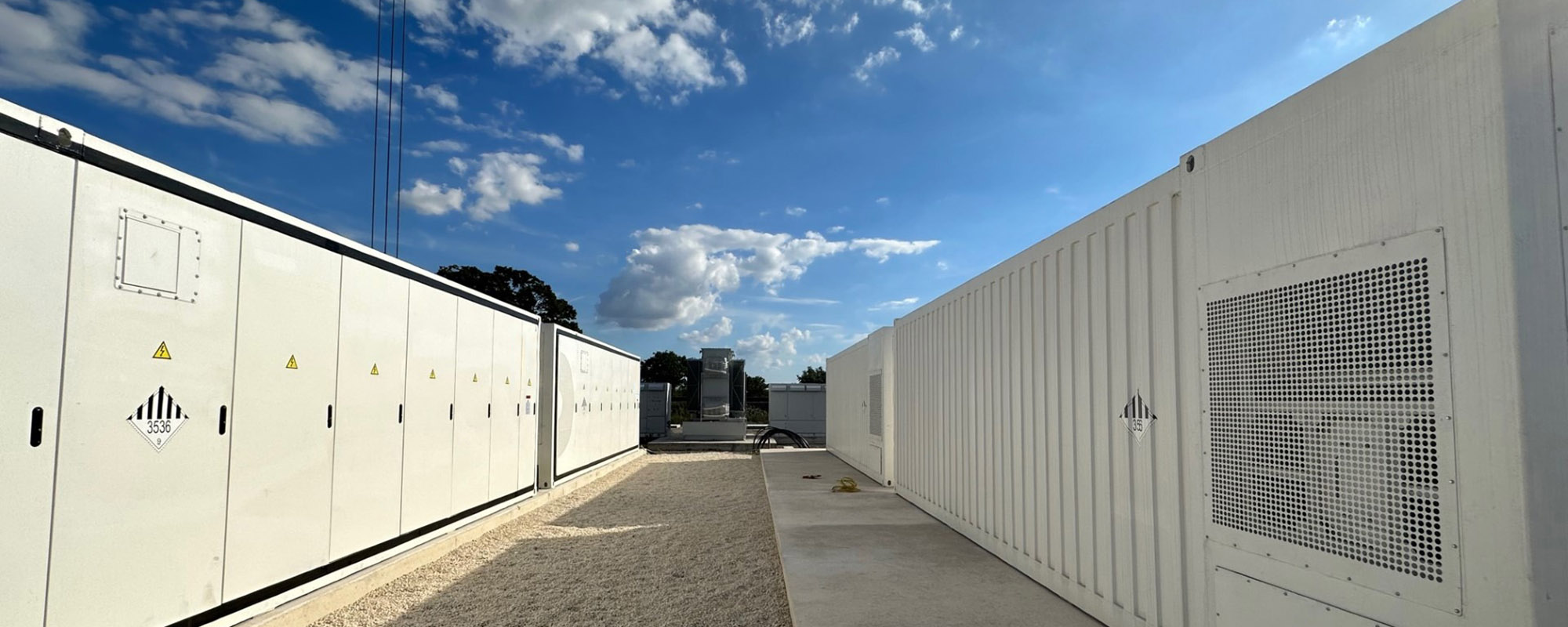
BESS Rack and Battery Cabinet Fasteners: An Engineering Guide for EPC Contractors and System Integrators
Battery Energy Storage Systems (BESS) are being delivered at a scale that, five years ago, few engineers planned for. A single 40-foot containerised unit can hold several megawatt-hours of lithium iron phosphate (LFP) capacity; a grid-scale plant can line up dozens of these enclosures in rows, connected to PCS transformers, MV switchgear and auxiliary systems. From the outside, the fastening looks simple: bolt racks to a plinth, bolt modules to racks, bolt cabinets together. In practice, the bolting design for a BESS plant is one of the most demanding fastening jobs in renewable energy today — and it is too often treated as an afterthought.
This guide is written for EPC contractors, system integrators and procurement engineers in Europe, the Middle East and Southeast Asia who are specifying, sourcing or inspecting energy storage fasteners. It covers the structural bolting logic for BESS enclosures and cabinets, the typical M12–M20 rack bolt sizes, corrosion protection to ISO 12944 C4/C5, vibration-resistant locking, grounding and lightning bonding, fire-safety constraints, and the documentation pack you need at handover. We work to ISO, EN, DIN and UNS standards throughout; if you are building a multi-vendor plant, this is the fastening language that travels.
If you are sourcing across the wider renewable portfolio — solar PV, wind, grid and storage — start from our renewable energy fastener manufacturing center, where this BESS guide sits alongside the PV, wind and corrosion-specific references.
Why BESS Fasteners Are Different From Standard Structural Bolting
A steel structure in a warehouse, a road gantry or a factory building is loaded once, commissioned, and expected to remain largely static for 25 years. A BESS enclosure is not that structure.
Three operational conditions change the fastening design:
- Cyclic and vibratory loading. Every charge and discharge cycle moves current through busbars, causes slight thermal expansion and contraction, and — combined with cooling fans, HVAC units, PCS switching and nearby transformers — introduces continuous low-frequency vibration at the rack and cabinet level. A bolted joint that does not self-loosen under 20 years of this loading is a designed joint, not a default one.
- Harsh external environments. Utility-scale BESS plants are sited wherever land and grid access are cheap: coastal deserts, inland deserts with dust and dew, tropical sites with salt-laden humidity, and Northern European sites with de-icing salts. The outer enclosure and its foundation anchors see the same C4/C5 corrosion classes as offshore-adjacent structures, even when the battery cells themselves sit in a conditioned interior.
- Safety-critical consequences of failure. A loose rack bolt is not a cosmetic defect. A battery module seated on an unsecured shelf can shift under seismic or transport-internal loading; an unresolved ground-bonding joint impairs lightning protection; a corroded structural anchor undermines the enclosure's fire-containment and mechanical-integrity role during a thermal event.
The result: BESS fastening is specified like structural bolting (grade, traceability, torque) but detailed like transportation and vibration engineering (locking, re-torque intervals, material compatibility).
BESS Enclosure and Cabinet Structural Bolting Requirements
Most grid-scale BESS plants use one of two form factors: the 20/40-foot ISO-style containerised enclosure (battery racks, BMS, fire detection and HVAC inside a steel box) or the outdoor cubicle/cabinet approach (smaller IP55/IP56 cabinets, sometimes open-rack with a roof canopy, common in C&I and front-of-meter projects).
The structural bolting stack, from foundation upward, is broadly the same:
- Foundation-to-baseframe anchors. Chemical anchors or cast-in anchors connecting the container skid or cabinet plinth to the concrete slab or piled foundation. Sizes commonly M16–M24, class 8.8 or 10.9, hot-dip galvanized to ISO 1461, with epoxy or zinc-flake supplementary coating where the slab is coastal. Seismic design (EN 1998 / local code) governs the number and edge distance.
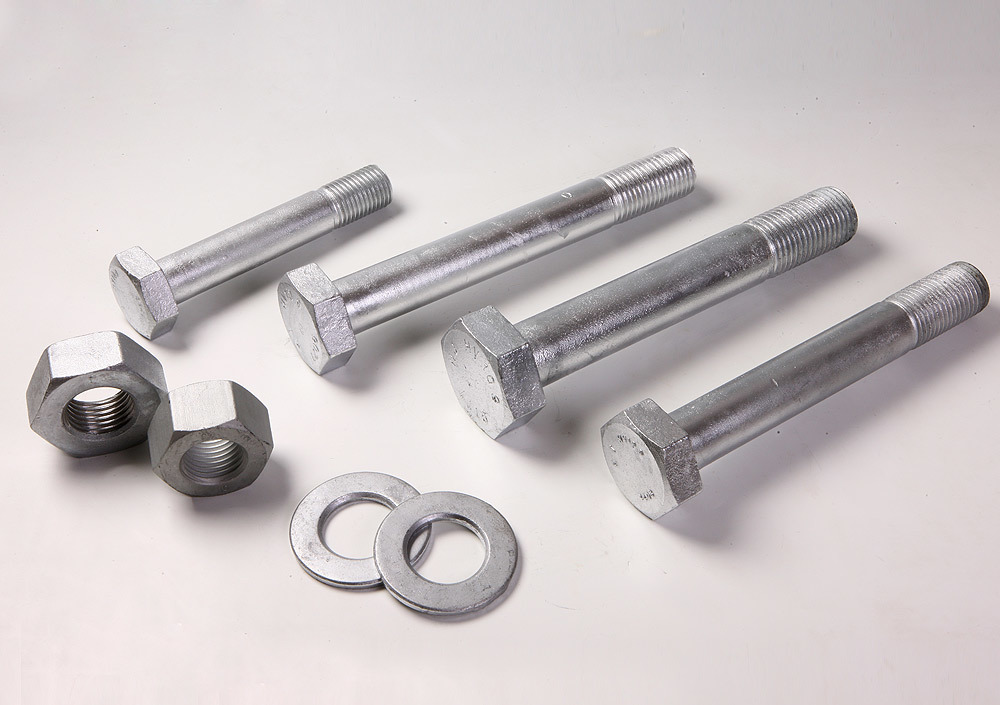
- Baseframe-to-upright and corner-post joints. These are factory-built in many container suppliers, but field-assembled skids and split cabinets rely on M12–M20 bolted brackets. Use property class 8.8 minimum; 10.9 where the joint transfers rack or seismic loads.
- Rack-to-cabinet / rack-to-floor joints. The upright rack frames bolt to the enclosure floor rails. This is where the M12–M16 bolts dominate (see next section).
- Module-to-shelf joints. Smaller, often captive screws supplied by the battery module OEM; the integrator's responsibility is to verify they are not substituted locally with weaker equivalents.
- Busbar and cable-tray bonding. Bonding jumpers and earthing bars use dedicated bolted connections — these are electrical joints, not just structural, and need their own torque and contact-surface rules.
A practical note for EPCs: do not assume the enclosure supplier's fastener BOM matches the local bolt standard on site. A container built in Asia may arrive with property-class markings that look familiar but do not carry EN 10204 3.1 documentation. Insist on the mill certificate pack before offloading, because replacing a 40-foot container's structural bolting on site is a schedule-killer.
Rack Mounting Bolts: Typical Sizes, Grades and Torque Strategy
For internal rack and cabinet mounting, the working range is M12 to M20, with M12 and M16 carrying the majority of joints. Here is the typical assignment:
| Joint | Typical bolt | Property class | Typical finish |
|---|---|---|---|
| Shelf-to-upright (per module shelf) | M12 | 8.8 | HDG (ISO 1461) or Zn-Ni flake |
| Upright-to-basefloor rail | M16 | 8.8 / 10.9 | HDG or stainless A4-70 |
| Rack-to-rack / cabinet cross-brace | M16 | 8.8 | HDG |
| Heavy-duty plinth / skid bracket | M20 | 10.9 | HDG, zinc-flake topcoat |
| Grounding / bonding lug | M8–M10 | A2-70 / A4-70 | Stainless, plain |
Two engineering points worth stating explicitly:
Do not under-torque on the assumption that "rack bolts are light duty." The bolt diameter may be modest, but the joint is vibration-critical and the load path includes module weight plus seismic acceleration. Use the supplier's torque table, and where it is missing, calculate from the clamp force required per EN 1993-1-8 for slip-resistant or non-slip joints, then add a safety factor for vibratory service. For lubricated M12 8.8 bolts this lands in the 80–90 N·m range; M16 8.8 around 200–230 N·m; M16 10.9 around 300–340 N·m — always confirm with the actual friction coefficient of the chosen coating.
Mark the tightened joints. On a container with hundreds of rack bolts, a simple paint-pen witness mark across the nut and flange is the cheapest quality control on site. It lets inspection crews spot a slipped joint in minutes.
Corrosion Protection: C4 and C5 Environments to ISO 12944
This is the area where BESS sourcing most often goes wrong. The interior of a conditioned container is benign, but the exterior enclosure, the foundation anchors, the rack bases that sit near the floor drain line, and any external cabling supports are exposed to whatever the local atmosphere throws at them.
ISO 12944-2 defines corrosivity categories. For BESS siting:
- C3 (urban, moderate SO₂, low salinity): Inland temperate sites, standard industrial parks. HDG to ISO 1461 (minimum 45–55 µm average) with a good washer face is typically adequate for a 15-year design life.
- C4 (urban/industrial, moderate coastal salinity): Most Middle East inland sites, Mediterranean coastal belts, many Southeast Asian industrial estates. Specify HDG to ISO 1461 plus a zinc-flake or epoxy powder topcoat, or move to 316 stainless (A4-70) for the exterior fasteners.
- C5-M (marine, high salinity): Coastal sites within a few hundred metres of the sea, salt-spray zones, many Gulf and Southeast Asian waterfront locations. Here the default answer is A4-70 / A4-80 (UNS S31603 / S31603 cold-worked) stainless on exposed fasteners, or mechanically duplex-coated carbon steel with a verified 720-hour salt-spray record. Avoid relying on HDG alone in C5-M; the zinc will chalk and scour under salt-laden wind.
A few practical rules:
- Always specify the coating thickness and salt-spray hours in the RFQ, not just "HDG." ISO 1461 gives a minimum coating mass for the bolt diameter; ask for the measured thickness on the certificate.
- Dissimilar metal contact matters. Stainless bolts into galvanized rack brackets, or aluminum busbars against steel washers, need isolation washers or torque-rated contact grease to prevent galvanic currents — especially in humid coastal sites.
- Cut ends and threads. A HDG bolt's cut end or stripped thread is a rust starter. Specify repair zinc paste on field-cut items, or buy the correct length rather than cutting on site.
For a deeper treatment of zinc coating strategy, see our guide to hot-dip galvanized fasteners to ISO 1461, which covers coating thickness tables, compatibility with nuts (oversize/tapped after galvanizing) and bolt-hole clearances.
Vibration-Resistant Fasteners for Battery Cabinets
If you remember one section of this article, make it this one. BESS joints loosen. Not dramatically — not in month one — but over years of fan cycling, HVAC starts/stops, PCS switching and road-traffic-induced vibration if the plant is near a highway. Standard hex nuts on flat washers will back off.
The locking strategy, in increasing order of robustness:
- Prevailing-torque lock nuts (DIN 985 nylon-insert style, or all-metal DIN 980V). Good for general interior rack joints. Note: nylon inserts have a temperature ceiling — do not use them near HVAC exhaust ducts or anywhere surface temperature exceeds ~120 °C. In those zones use all-metal prevailing-torque nuts.
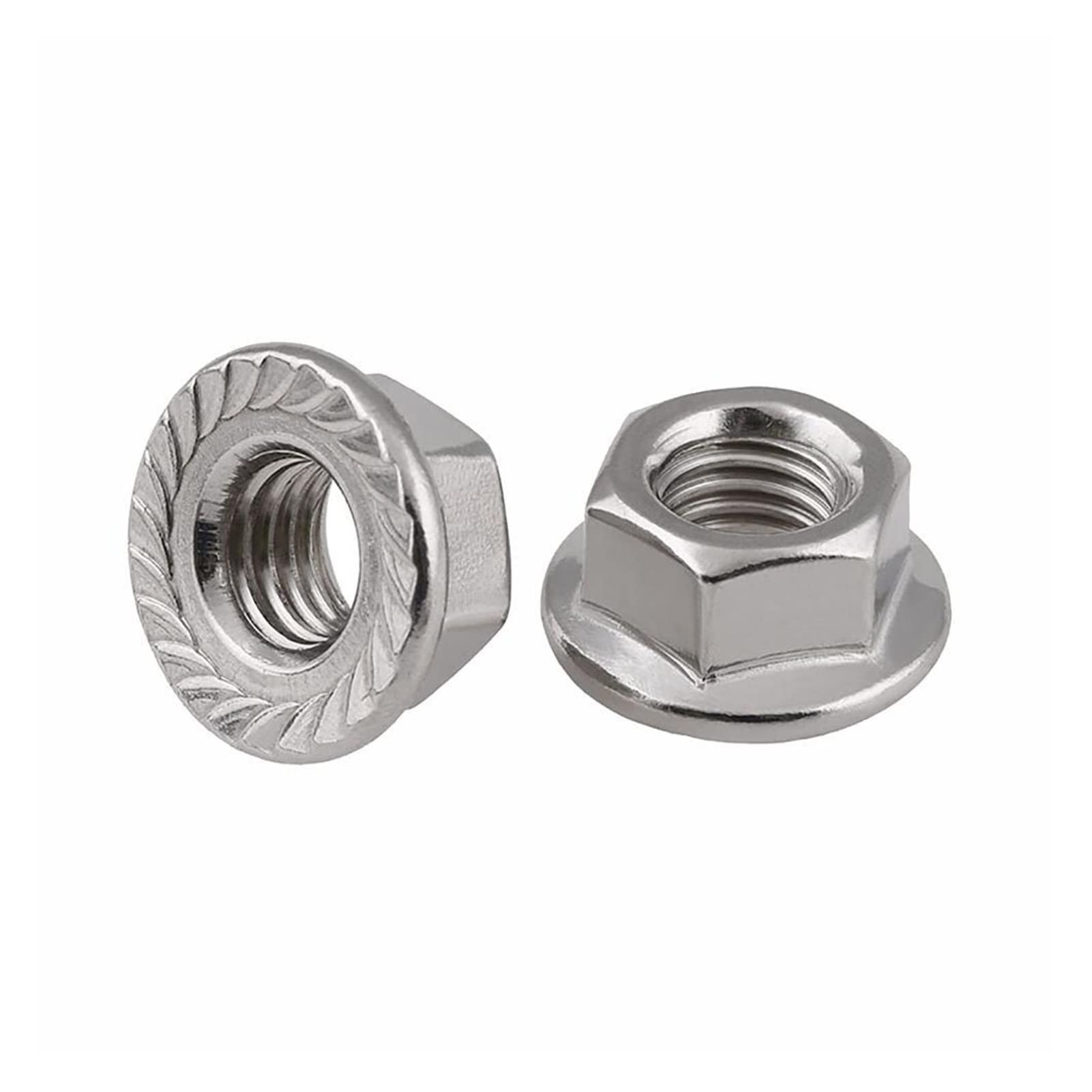
- Spring and toothed lock washers (DIN 127, DIN 6797). Better than nothing, but in continuous vibration they lose effectiveness once they flatten. Treat as a secondary measure, not primary.
- Wedge-locking washers (DIN 25201 / paired serrated conical washers). This is the workhorse for BESS baseframe, skid and heavy rack joints. The two halves wedge against each other; vibration cannot rotate the nut because any rotation would have to overcome the ramp angle, which is steeper than the thread helix. Use these on M12 and larger structural joints in the enclosure. They are reusable a limited number of times — inspect after re-torque.
- Thread-locking adhesive (medium-strength, removable grade). Acceptable on small captive screws and busbar studs where disassembly is infrequent. Not a substitute for structural wedge-locking on primary load paths, and verify chemical compatibility with battery-compartment materials.
A re-torque schedule should be in the O&M manual: first check at 3–6 months after energisation, then annually for the first three years, then per condition. Document the witness marks.
Stainless 316 vs HDG Carbon Steel: Material Selection
This is the most common procurement trade-off in BESS fastener packages. Both work; the question is which joint they belong on.
Hot-dip galvanized carbon steel (property class 8.8 / 10.9, ISO 1461).
- Best where high clamp load and structural strength matter: foundation anchors, baseframe brackets, M16/M20 skid bolts.
- Can reach property class 10.9 and 12.9 where alloy steel is required; 316 stainless tops out around A4-80 and is not a direct substitute for a 10.9 structural bolt in tension-critical joints.
- Cheaper, easier to source globally, familiar to structural steel crews.
- Weakness: corrosion life in C5-M; requires coating maintenance; galling-free when galvanized on both nut and bolt.
A4-70 / A4-80 stainless (UNS S31603 / X5CrNiMo17-12-2).
- Best where corrosion resistance dominates: exterior cabinet skin fasteners, coastal plant anchors, grounding and bonding lugs, humid tropical sites, any fastener near wash-down or condensate.
- Naturally passive, no coating to scratch or touch up.
- Weaknesses: lower strength than 10.9 carbon steel (do not swap a 10.9 bolt for A4-70 without rechecking the joint); prone to galling when stainless is assembled dry onto stainless — always use a suitable anti-seize, and specify threads lubricated at assembly. Also more expensive and longer lead times in some markets.
A sensible default package: HDG 8.8/10.9 for primary internal structural and rack joints; A4-70 stainless for exterior-facing, grounding, and C5-exposed positions. This balances cost, strength and corrosion life without over-specifying the entire plant in 316.
Lightning Protection, Bonding and Grounding
A BESS enclosure is a large metal box sitting on a concrete slab in an open field — exactly the sort of object a lightning strike targets. The fastener specification interacts with the earthing system in two places.
First, the enclosure-to-earth bonding connection must be a low-impedance joint. Use dedicated earth studs (typically M8–M10, A4-70 stainless), star or serrated washers that bite through paint and coating to expose bare metal, and a torque-controlled termination. Painted-against-painted bolted joints are a high-resistance path — unacceptable for lightning and fault-current dissipation.
Second, rack-to-enclosure bonding must maintain equipotentiality so that battery racks, cabinet frame and earthing busbar are at the same potential during a surge. Bonding jumpers should be short, direct, and terminated at points where the bolted joint is not relying on a corroded or painted interface.
Two cautions:
- Do not compromise the structural bolting to make grounding. A serrated star washer on a primary M16 rack bolt is fine; a tack-welded earthing lug on a load-bearing member is not — check with the structural engineer.
- In C4/C5 sites, the dissimilar-metal contact between copper earth braids and steel/stainless bolts needs a tin-plated or tinned transition pad, otherwise you are designing a galvanic cell at the one joint that must never corrode open.
Fire Safety: Non-Melting, Low-Smoke Fastener Constraints
Lithium battery thermal runaway is the worst-case event in a BESS building, and the fastener spec plays a small but real supporting role.
During a thermal event, compartment temperatures can spike well above the melting point of zinc. A few implications:
- Zinc-coated (HDG or electroplated) bolts inside the battery compartment can melt or evaporate at elevated temperatures, contributing zinc oxide fume load. This is one reason integrators increasingly specify stainless A4-70 fasteners inside the battery compartment rather than HDG — stainless does not melt at the temperatures a compartment sees before fire suppression acts, and it does not contribute burning zinc droplets.
- Nylon-insert lock nuts inside the compartment should be avoided where heat exposure is credible; use all-metal locking hardware.
- Cable and busbar support fasteners should be selected so that a 30–60 minute fire exposure does not allow the busbar to sag or short against adjacent metalwork. This is normally handled by the busbar OEM, but integrators should confirm the shelf and tray support bolts are stainless, not plated carbon.
- Document compliance against IEC 62619 (safety of secondary lithium batteries for industrial use) in the supplier file. We do not certify the cells, but we support integrators by supplying hardware whose material and traceability pack can be referenced in the system safety case.
Treat fire-safety fastener selection as a joint decision with the fire-protection engineer, not a solo procurement call.
Documentation: EN 10204 3.1 and Compliance Support
At handover, the BESS plant owner's engineer will open the O&M dossier and ask for material certification. For structural and safety-critical fasteners, that means:
- EN 10204 3.1 mill inspection certificates for heat-treated bolts, nuts and structural anchors. The 3.1 certificate (issued by the manufacturer, independent of the customer) confirms heat number, material, property class, dimensions and test results. 3.2 (independent third-party witnessed) is occasionally specified for seismic-critical anchors — confirm with the structural engineer.
- Coating certificates referencing ISO 1461 (HDG) or the agreed zinc-flake specification, with measured thickness.
- Dimensional and property-class marking on the fasteners themselves: ISO 898-1 property class stamps on bolt heads, nut marking to ISO 898-2.
- IEC 62619 / system-compliance support pack on request: material declarations, RoHS/reach statements, and traceability linkage to the lot used on the specific project.
For EPCs running multi-container plants, ask the fastener supplier to bundle certificates by container or by rack bay, not as one undifferentiated PDF. It saves weeks at FAT and handover.
Quick-Reference Specification Table
Use this as a starting RFQ checklist; confirm final grades against your structural and fire-protection engineer.
| Position | Bolt size | Property class / material | Finish / corrosion class | Locking | Docs |
|---|---|---|---|---|---|
| Foundation anchor to slab | M16–M24 | 8.8 / 10.9 alloy steel | HDG ISO 1461 + epoxy, C4/C5 | All-metal lock nut + washer | EN 10204 3.1 |
| Baseframe / skid bracket | M16–M20 | 10.9 alloy steel | HDG + Zn-flake, C4/C5 | Wedge-locking washers (DIN 25201) | EN 10204 3.1 |
| Rack upright to floor rail | M16 | 8.8 | HDG, C3/C4 | Wedge-locking or DIN 980V | EN 10204 3.1 |
| Shelf to upright | M12 | 8.8 | HDG or Zn-Ni flake | Prevailing-torque nut | 3.1 on batch |
| Exterior cabinet skin | M8–M12 | A4-70 (UNS S31603) | Plain, C5-M | Serrated / spring washer | Material cert |
| Grounding / bonding lug | M8–M10 | A4-70 | Plain, tinned transition | Star washer, torque-controlled | Material cert |
| Internal compartment hardware | M12–M16 | A4-70 preferred | Plain (no zinc in fire zone) | All-metal wedge lock | IEC 62619 support pack |
| Busbar / cable tray support | M10–M12 | A4-70 | Plain | Spring lock + anti-seize | Material cert |
FAQ: BESS and Battery Cabinet Fasteners
Q: What size bolts are used to mount battery racks?
A: The vast majority of rack and cabinet mounting joints fall between M12 and M20. Shelf-to-upright connections are typically M12 in property class 8.8; upright-to-floor-rail and heavy cross-brace joints are M16 in 8.8 or 10.9; skid and plinth brackets go to M20 in 10.9. Always follow the rack OEM's torque table rather than substituting diameters.
Q: Should I use hot-dip galvanized or stainless 316 fasteners in a BESS plant?
A: Use HDG carbon steel (8.8/10.9) for primary structural and rack joints where strength matters, and A4-70 stainless (UNS S31603) for exterior-facing, grounding/bonding, and C5-M coastal positions. Inside the battery compartment, stainless is also preferred because zinc coatings can contribute fume load in a thermal event. Do not replace a 10.9 structural bolt with A4-70 without rechecking the joint — stainless is lower strength.
Q: What corrosion class does a BESS enclosure need?
A: Per ISO 12944-2: inland temperate industrial sites typically C3; most Middle East inland and Mediterranean coastal sites C4; coastal salt-spray locations C5-M. HDG to ISO 1461 handles C3 well; C4 needs HDG plus topcoat or stainless; C5-M should default to A4-70/A4-80 stainless or a verified duplex coating.
Q: How do I stop battery cabinet bolts from loosening over time?
A: Specify wedge-locking washer pairs (DIN 25201 style) on M12 and larger structural joints, use all-metal prevailing-torque lock nuts rather than nylon inserts in warm zones, apply a documented torque to the supplier's table, paint-mark tightened joints, and re-torque at 3–6 months, then annually for the first three years.
Q: Do BESS fasteners need EN 10204 3.1 certification?
A: For structural, seismic and fire-zone fasteners, yes — 3.1 mill certificates should accompany the batch. Bundle them by container or rack bay for FAT and handover. For non-structural cosmetic hardware, material declarations are usually sufficient, but confirm with the plant owner's specification.
Q: How do fasteners support lightning protection and grounding?
A: Bond the enclosure, racks and earthing busbar with dedicated A4-70 studs and serrated/star washers that bite through paint to bare metal, keeping the impedance low. Use tinned transition pads where copper braids meet steel to avoid galvanic corrosion, and never compromise a structural bolted joint to force a grounding connection.
Related Guides
This article is part of our renewable-energy fastener series. For the adjacent engineering topics:
- Renewable energy fasteners for solar, wind and grid — manufacturing center: the index page covering the full material axis (HDG carbon steel, 316 stainless, 10.9 wind-grade alloy) and product families.
- Solar PV mounting fasteners — roof, ground and rail systems: matching guide for PV rail, clamp and foundation hardware, including A2/A4 stainless selection for coastal arrays.
- Wind turbine fasteners — flange bolts and foundation anchors: 10.9 and 12.9 alloy steel bolting, tower flange torque procedures and foundation anchor design.
- Hot-dip galvanized fasteners to ISO 1461: coating thickness, nut compatibility and salt-spray guidance for C3/C4 environments.
Get the Right Fastener Pack for Your BESS Project
Specifying BESS hardware is easier when the supplier understands the whole container — rack, skid, grounding and fire zone — not just the bolt on a drawing.
Step 1 — Send us your RFQ. Share the BOM (or a layout sketch), the site corrosivity class (C3/C4/C5-M), the seismic zone, and the documentation level required (EN 10204 3.1 standard; 3.2 on request). We will return a line-by-line proposal with sizes, grades, finishes and torque notes.
Step 2 — Request samples. For C4/C5 projects or first-time integrators, we can send physical samples of the M12/M16 rack bolts, wedge-locking washers and A4-70 bonding studs for your lab and your structural engineer to verify before mass production.
Step 3 — Talk to us directly. WhatsApp our engineering team with your project deadline and container count — for EPCs scheduling 3–10 container plants, we can align production lead time with your installation window and bundle 3.1 certificates per bay.
Energy storage is a 20-year asset. The bolts holding it together should be specified like one.