Wind Turbine Tower Bolts: EN 14399 High-Strength Fastener Guide
---
Introduction: Why Tower Bolts Are a Fatigue Design, Not a Catalog Item
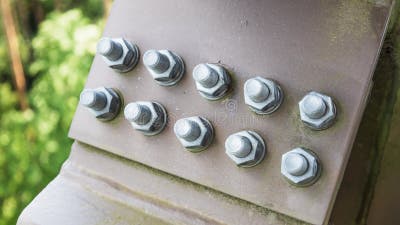
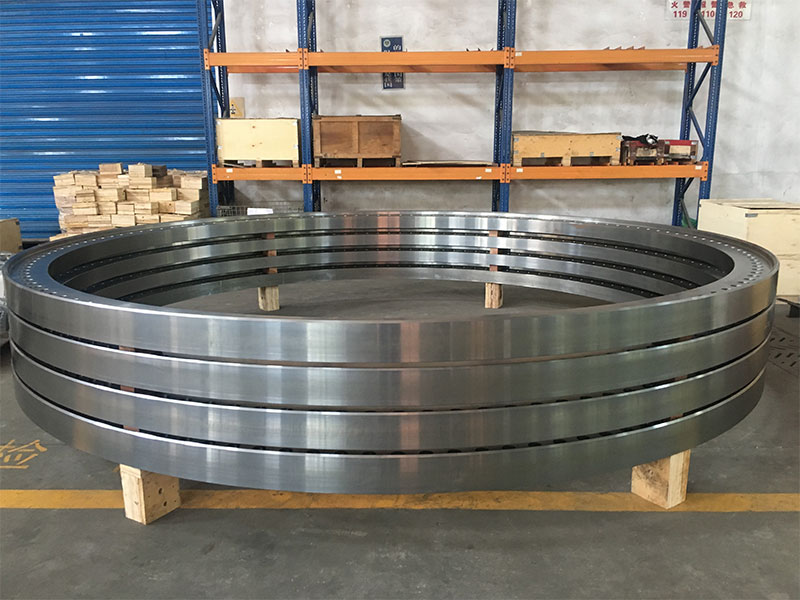
A wind turbine tower is assembled from a stack of cylindrical sections joined by ring flanges and high-strength bolts. Those bolts are not holding a static load — they are holding a structure that flexes, vibrates, and sheds loads continuously for twenty years. Every tower connection is a fatigue detail, and the bolts are sized and preloaded so that, under normal operation, the flange joint never opens and the bolt stress stays below the fatigue limit.
That is why tower bolt specifications are stricter than almost any other bolting application: precise property classes, controlled preload, low-friction coatings, and full lot traceability. This guide explains the standards and specification points a wind project procurement team needs to verify.
Section 1: The Standard Family That Governs Tower Bolts
In European and international wind projects, tower bolts are specified to the EN 14399 family (High-strength structural bolting assemblies for preloading):
- EN 14399-1: general requirements
- EN 14399-3: system HR — hexagon bolt and nut assemblies
- EN 14399-4: system HV — hexagon bolt with larger width across flats (heavy hex), the classic tower bolt system
- EN 14399-5: plain washers
- EN 14399-6: plain chamfered washers
- EN 14399-7: system HR — countersunk head bolt assemblies
- EN 14399-8: system HV — hexagon fit bolts
- EN 14399-2: suitability for preloading — the core test governing the assembly's preload behavior
- EN 14399-9: direct tension indicators (DTI)
- EN 14399-10: system HVP, high-pretension fit bolt assemblies
The key concept: EN 14399 supplies complete assemblies (bolt + nut + washers) tested together so that the preload behavior — the relationship between tightening and achieved clamp load — is known and consistent. Mixing bolts and nuts from different manufacturers is discouraged because the assembly's friction and preload characteristics are no longer certified.
For projects following Chinese practice, the equivalent is the GB/T 1228–1231 family for high-strength bolting (with GB/T 1229/1230 for nuts and washers and GB/T 1231 for mechanical properties), which is widely used on wind farms in China and exported projects with Chinese-spec towers.
Section 2: Property Class and Strength
Tower flange bolts are almost always property class 10.9 (ISO 898-1 / EN ISO 898-1), with some designs using 8.8 for smaller towers or 12.9 in special high-strength connections.
- 10.9: minimum tensile strength 1040 MPa (nominal 1000 MPa per ISO 898-1), minimum yield 940 MPa — the standard for tower and blade-root connections
- 8.8: lower strength, used in secondary structures and some smaller towers
- 12.9: higher strength but more sensitive to hydrogen embrittlement and preload control; rarely used in tower flange connections because of notch sensitivity in fatigue
Important: property class is not interchangeable with ASTM grades. A tower bolt specification written in EN terms (10.9, HV system, EN 14399-4) must not be silently converted to an ASTM grade. If the project references EN 14399, the whole assembly should be supplied to EN 14399.
Section 3: Preload — the Heart of the Fatigue Design
Tower bolts are designed for preloaded (slip-resistant) joints. The bolt is tensioned to a defined preload so that the flange faces remain in compression under service loads, and the bolt itself experiences only a small alternating stress.
Specification points:
- Target preload: typically 70% of the bolt's yield strength (0.7 × fyb), set by the design. EN 1993-1-8 (steel structures) and the turbine-specific design standards (IEC 61400 series) are referenced in turbine design requirements.
- Tightening methods: torque control, combined torque + angle, or hydraulic tensioning. For large-diameter tower bolts, hydraulic tensioning or torque-angle methods are preferred because they give the most accurate preload.
- Friction coefficient: the coating and lubricant set the nut factor; the specified friction coefficient (often stated as a range, e.g., 0.12–0.16) must be controlled so the torque table is valid.
- Verification: preload is verified by torque or tension monitoring during assembly, and sometimes by ultrasonic bolt gauging on sample bolts.
If the supplier changes the coating or lubricant, the friction coefficient changes, and the torque table in the field no longer produces the designed preload. This is why the coating is part of the bolt specification, not an option.
Section 4: Coatings for Tower Bolts
Coatings for tower bolts have two jobs: corrosion protection and friction control.
- Geomet / zinc-flake coatings (non-electrolytic zinc flake, ISO 10683): thin-film, sacrificial, low-hydrogen-embrittlement risk, controlled friction coefficient — the most common choice for 10.9 tower bolts.
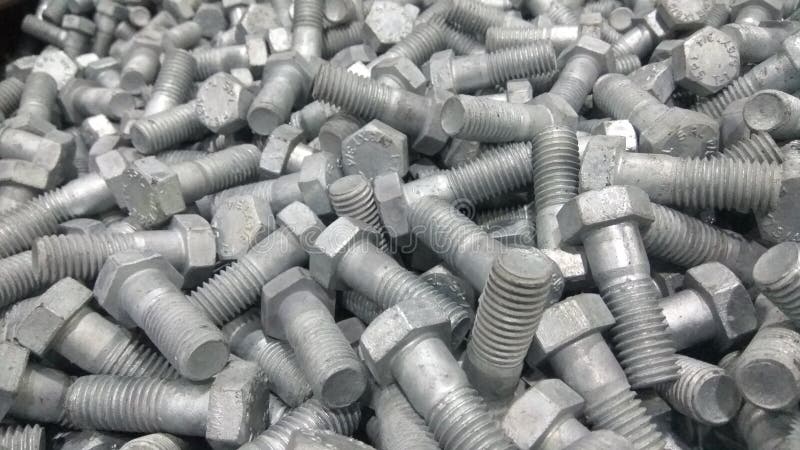
- Hot-dip galvanizing (ISO 10684 for fasteners): heavy, very good corrosion protection for external connections, but the coating thickness affects thread fit and friction; for preloaded 10.9 bolts, HDG is usually limited to non-fatigue connections unless specially managed (threads cut after galvanizing, or oversize tapping).
- Electroplated zinc: restricted for high-strength 10.9 bolts because of hydrogen embrittlement risk and friction scatter.
- Dacromet / Zn-Al-Mg variants: used where thin-film corrosion protection with defined friction is needed.
- On-site touch-up and storage: tower bolts are typically supplied with VCI packaging and storage instructions to preserve the coating and friction properties until assembly.
The specification should state the coating standard, the coating thickness range, the friction coefficient, and any restrictions (e.g., no electroplating on 10.9, no HDG on fatigue-critical bolts).
Section 5: Fatigue, Testing, and Documentation
Fatigue performance of tower bolts depends on: preload level, thread root geometry (rolled threads are mandatory for fatigue-critical bolts), notch sensitivity of the material, and surface quality.
Documentation and testing that wind project QA expects:
- Material certificates to EN 10204 3.1, per heat
- Mechanical test reports: tensile, yield, elongation, hardness
- Preload / friction test data: torque-preload calibration for the assembly, with the friction coefficient range
- Impact testing at low temperature where the project climate requires it (e.g., −40 °C for cold-climate wind farms)
- Thread rolling verification: rolled (not cut) threads on fatigue-critical bolts
- Coating thickness and adhesion records
- Lot traceability from raw material to finished assembly, marked on boxes
A wind tower bolt order is not a "fast delivery commodity" order. The supplier's quality system, test capability, and documentation discipline are part of the product.
Section 6: Procurement Checklist for Tower Bolts
When you send the inquiry or review a quotation, verify these points:
- Assembly standard: EN 14399-4 (HV) / EN 14399-3 (HR), or GB/T 1228-1231 for Chinese-spec projects
- Property class: 10.9 (state it explicitly)
- Size: e.g., M36 × 320, with thread pitch (M36 is a typical tower flange bolt size; larger towers use M39/M42)
- Complete assembly: bolt + nut + washers as a matched set
- Preload requirements: target preload, tightening method, friction coefficient
- Coating: standard, thickness, friction properties; electroplating prohibited on 10.9
- Tests and documentation: 3.1 MTCs, preload calibration, impact at required temperature, coating records
- Traceability and marking
- Packaging: VCI, counts per box, storage instructions
---
FAQ
Q1: Why are tower bolts specified as complete assemblies? Preload behavior depends on the combination of bolt, nut, washers, coating, and lubricant. EN 14399 assemblies are tested together so that friction and preload characteristics are known; mixing parts from different sources invalidates that calibration.
Q2: Can 8.8 bolts be used in tower flange connections? Some smaller towers use 8.8, but 10.9 is the standard for tower flange and blade-root connections. Follow the design specification; do not substitute grades without engineering approval.
Q3: Why is electroplated zinc restricted on 10.9 bolts? High-strength fasteners (≥ 10.9) are at risk of hydrogen embrittlement from acid pickling and electroplating, and plated coatings give inconsistent friction. Thin-film zinc-flake systems (ISO 10683) are the preferred alternative.
Q4: What is the difference between HV and HR systems in EN 14399? HV (EN 14399-4) uses a heavy hex head with larger width across flats, giving a better load distribution under the head — the classic preloaded structural system. HR (EN 14399-3) uses a standard hex head. Tower designs typically specify HV.
Q5: How is preload verified in the field? By torque control (with a calibrated torque-preload table for the supplied coating), torque-angle control, hydraulic tensioning, or ultrasonic bolt measurement on sample bolts. The method is defined in the project's bolting procedure.
Q6: Do I need separate certificates for every heat? Yes — 3.1 material certificates per heat, with traceability from the heat to the delivered lots, are standard for wind tower bolts and are checked at inspection.
---
Need a complete wind tower bolt package? Send us your drawing or the EN 14399 / GB specification, and we will confirm assembly supply, 10.9 property class, coating and friction properties, preload calibration data, and the full documentation package for your wind farm project.